
Stanley Ernest Gould
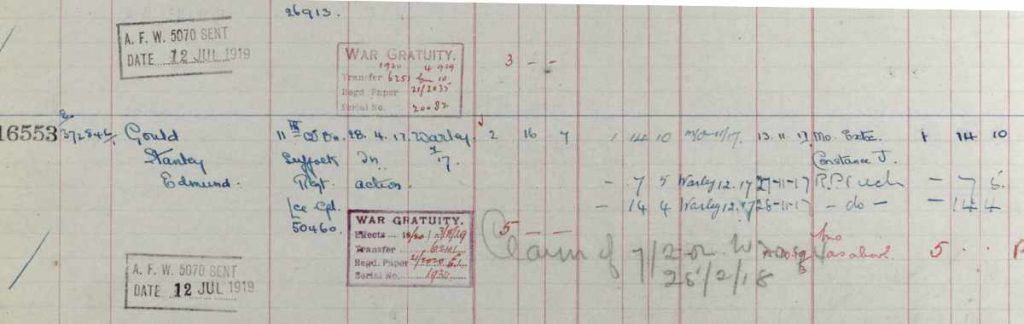
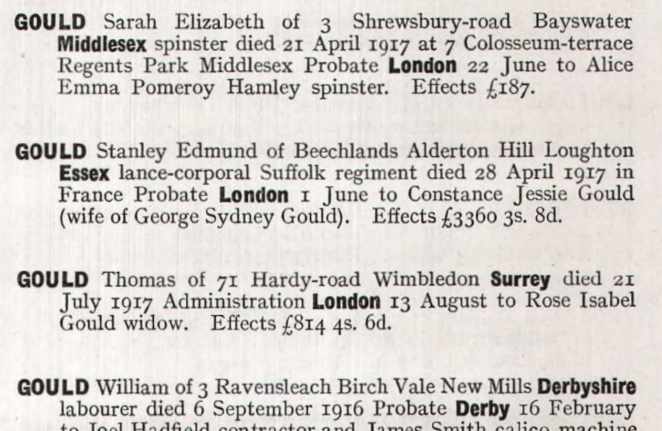
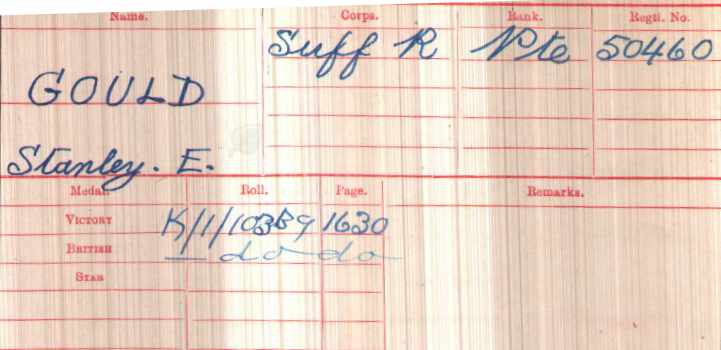
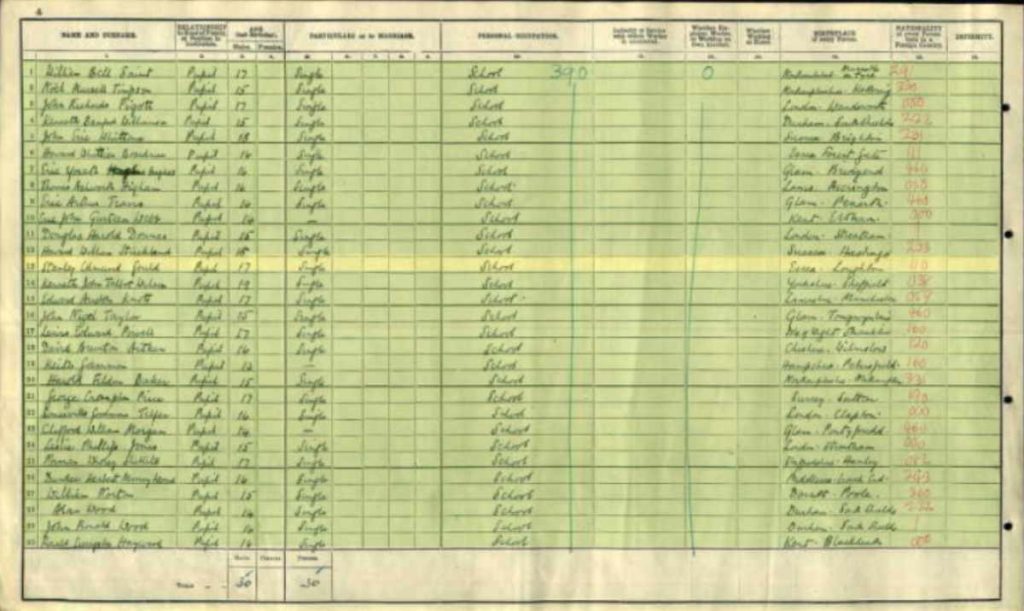
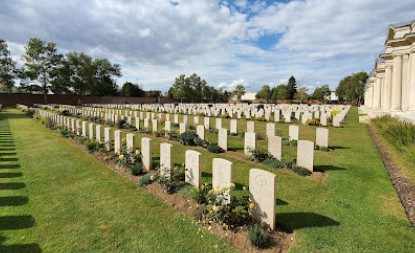
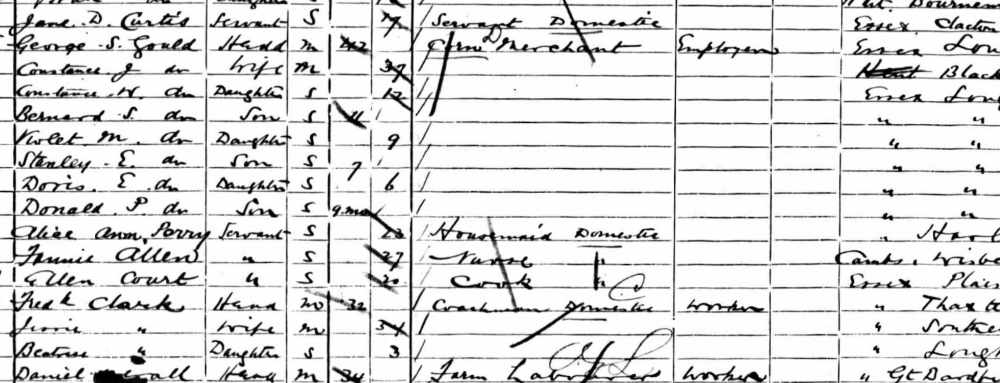
Stanley Ernest Gould was Lance Corporal 50460 in the 11th Battalion of the Suffolk Regiment. He died on 28th April 1917 at Roeux, near Arras, France. He was born in Loughton in 1894 and lived at “Beechlands”, Alderton Hill, Loughton. Beechlands is a large property, like many others along this road, and today it functions as a care home.
A separate report has been prepared for Roy Ernest Gould, who is Stanly’s cousin.
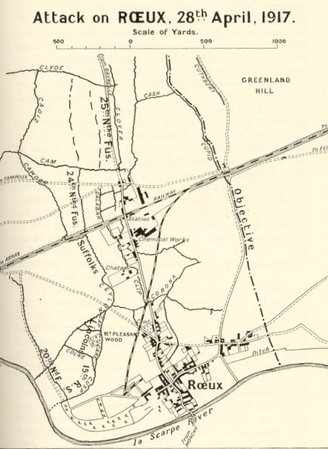
On 28th April 1917, the 11th Battalion launched an attack against the German lines around and beyond the Chemical Works at the village of Roeux, east of Arras. At first light, at 4.25 am, the pre-arranged barrage was brought down along the German front line. For two minutes, it rained shrapnel into the enemy’s front line before it ceased at 4.27 am, and the infantry advanced.
However, no sooner had the men got up and advanced than a mass of German machine guns opened up through the still setting smoke. The barrage had missed a complete line of German defensive trenches, and they were soon firing back as the Cams-Suffolks advanced.
By 5.00 am, it was clear that the attack had failed, though some men had managed to reach a quarry to the right of the Chemical Works. The remnants of the attacking waves fell back into the front line, and shortly afterwards, the Battalion Commander, Major G. L. J. Tuck, who had watched from the Second Line and saw the attack falter, came forward into the front line to “clear up the situation and re-organise the defence.”
The front line was full of wounded, but it was clear that many men had been lost in the attack. It was estimated that approximately five officers and 300 other ranks remained, along with two officers and about 60 men from the 16th Royal Scots who had been mixed up in the attack. These men were the ‘moppers-up’ who were to follow up the attacking waves.
Out in front, a handful of men in a shell hole had resisted numerous calls from the enemy to surrender, but as their ammunition was exhausted, they bowed to the inevitable and surrendered.
At around 9.45 am, a stiff enemy counterattack began. Advancing from the south near the village of Roeux, it broke through the front line, and all communication was lost. On the Battalion’s right flank, the enemy breached Ceylon Trench, pushing the Lincolns back towards Mount Pleasant Wood. A dangerous enveloping salient was developing, threatening to trap the 11th Battalion in the middle.
However, the line held, and the enemy was repelled. It was confirmed that the enemy had withdrawn beyond the railway line and was retreating back into Roeux itself, while the Lincolns were gradually and steadily forcing the enemy out of Mount Pleasant Wood, skilfully employing their bombing teams. The rest of the day remained quiet, though no one could hide the deep disappointment over the failure of the attack and the grievous losses suffered by the Battalion.
As darkness fell, those who had made it to the quarry that morning returned, bringing a handful of prisoners. At 10.00 pm, the Battalion was withdrawn to allow a much wider artillery concentration to be laid down across the whole of the former Cambs-Suffolks trenches. It was to be the precursor to another attack by another unit, an attack that was also to fail.
On Friday, 18th May 1917, the Essex Chronicle reported, “Killed in action. News has been received that Lance-Corporal Stanley E. Gould, Suffolk Regiment, son of Mr. and Mrs. G. Sidney Gould of Loughton, was killed in action in France on 28 April. Lance-Corporal Gould was in his 24th year, and he was one of the directors of Messrs Gould Ltd. He was an Old Hillian.”