

Francis Gyrth Johnston Wetherall
Francis Gyrth Johnston Wetherall was born in 1896 and died on 19th September 1918, aged 22. Records list him among the first casualties to fall on that date. He studied at the University of London. He was the son of Thomas Joseph and Frances Wetherall of “Tresco”, 16, The Uplands, Loughton. He is remembered on the Jerusalem Memorial as he has no known grave. He served as a Lieutenant with the 72nd Punjabis and as a 2nd Lieutenant with the 2nd Battalion, Royal Munster Fusiliers, in France.
There are several reasons a person might have served in two disparate regiments in WWI. British officers were frequently seconded between British regiments and Indian Army units. An officer might begin his career in the Munsters and later be attached to an Indian Regiment as a regular officer, an interpreter, or a staff officer. Indian Army regiments relied heavily on British officers, and wartime casualties created a constant need for experienced men. During WWI, many officers moved temporarily between units.
He is remembered on the Jerusalem Memorial: it states, “Also served with the 2nd Battalion Royal Munster Fusiliers”. That wording strongly suggests that he served on the Western Front with the 2nd Royal Munster Fusiliers and was later transferred or attached to the Indian Army.
Men with combat experience in France were often transferred to Indian Army regiments. The 72nd Punjabis, like many Indian regiments, had a small cadre of British officers commanding mostly Punjabi Muslim, Sikh, and Pathan troops.
The Royal Munster Fusiliers spent long periods stationed in India and Burma before WWI. British regiments there often trained and worked alongside Indian Army units. A Munster Fusilier officer who knew local languages or was familiar with frontier conditions could later transfer to an Indian Regiment. Wartime reorganisation and emergency commissions in WWI caused enormous losses among officers. Men from British regiments were sometimes promoted, re-commissioned, or attached to Indian battalions needing officers.
On 19th September 1918, the 72nd Punjabis were serving with the 75th Division of the British Egyptian Expeditionary Force in Palestine. That day marked the opening of the Battle of Megiddo (specifically the Battle of Sharon), the decisive Allied offensive against the Ottoman armies in Palestine.
The day was significant because they took part in the infantry assault that began before dawn, following a heavy artillery bombardment at 4:30 a.m.; the regiment attacked Ottoman defensive positions as part of the advance that broke through the Turkish front line on the Plain of Sharon.
The breakthrough enabled Allied cavalry to pass through the gap and begin the encirclement that led to the destruction of the Ottoman Eighth Army. Contemporary regimental records note that the 72nd Punjabis were in action on the opening day of the Battle of Megiddo and suffered just over 100 casualties.
Commonwealth War Graves records note he was the son of Thomas Joseph and Frances Wetherall, from “Tresco” in Loughton, Essex, England.
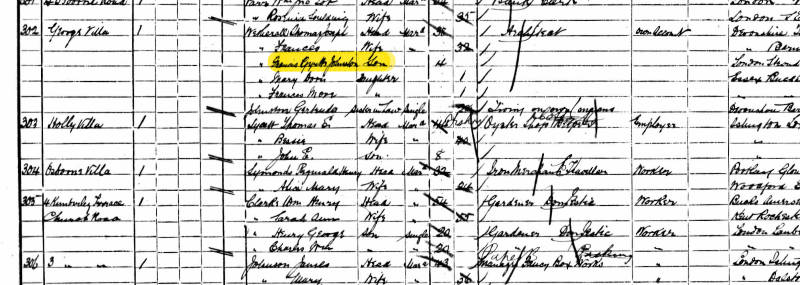
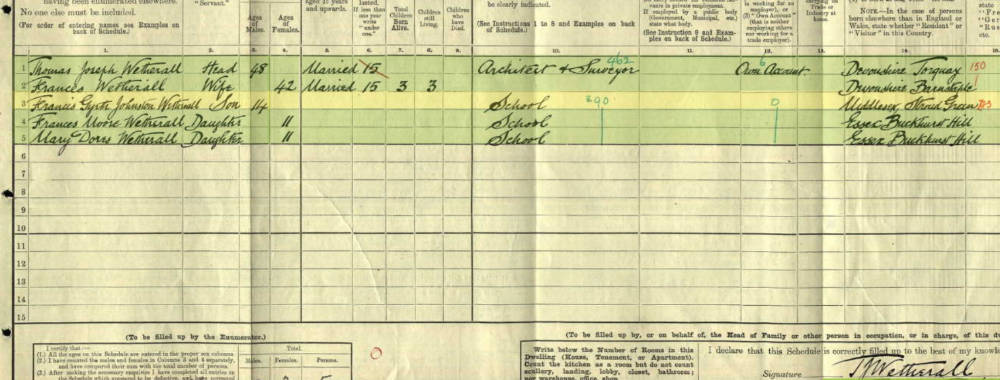
The 2nd Battalion Royal Munster Fusiliers was a British Army infantry regiment that mainly recruited from south-west Ireland. This regiment was established in 1881 through the merger of two East India Company regiments and was disbanded in 1922 following the creation of the Irish Free State.
The 2nd Battalion, at the outbreak of war, was based at Aldershot as part of the 1st (Guards) Brigade, 1st Division, and arrived in France in August 1914.
After suffering heavy casualties at Etreux in September, the Battalion left the Division and went into reserve before being transferred to 3rd Brigade, 1st Division later in the year.
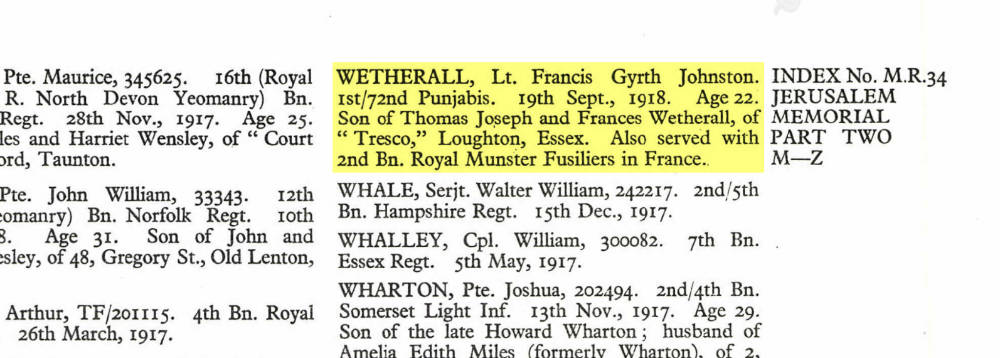
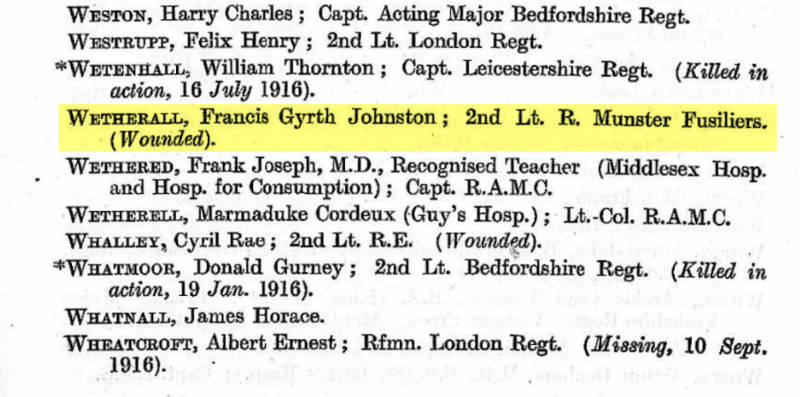
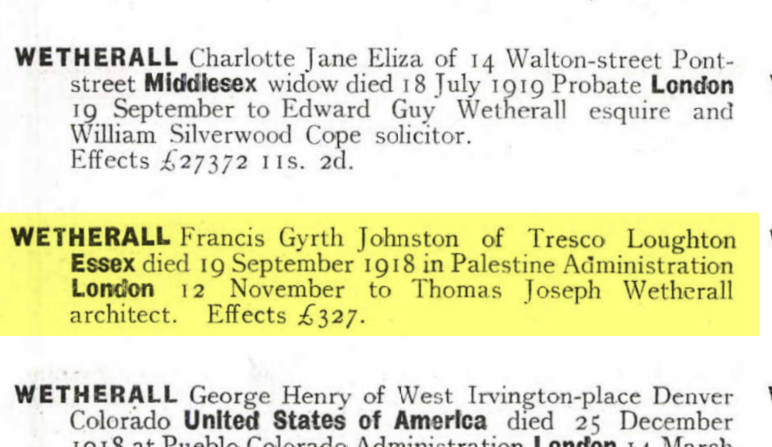
for Francis Gyrth Johnston Wetherall
Click link for more detail about the Battle of Megiddo