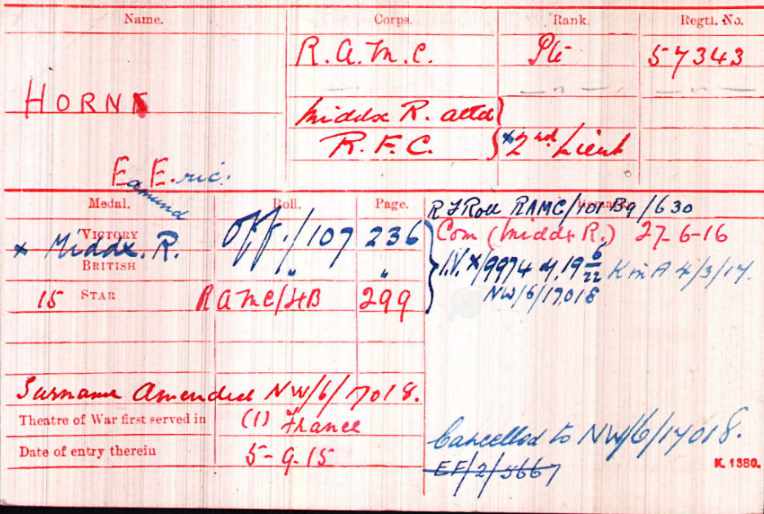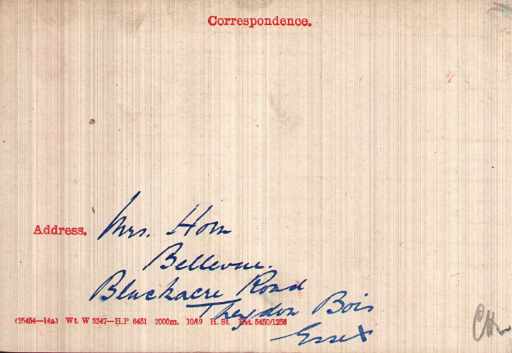

Edmund Eric Horn
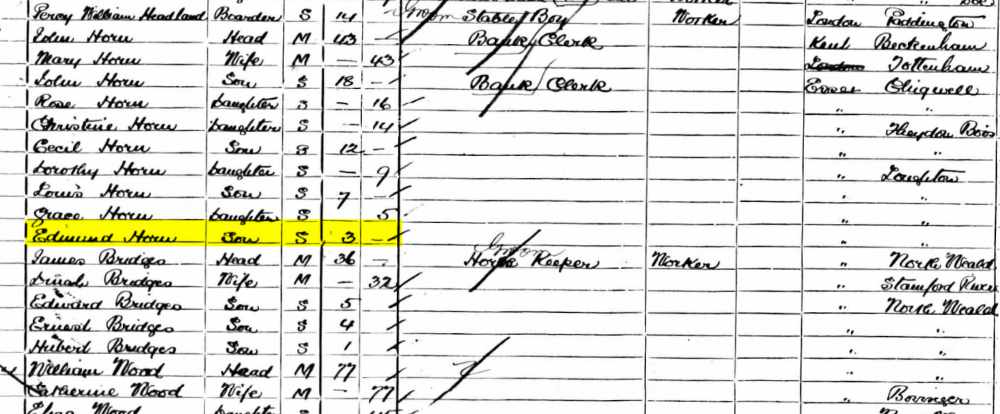
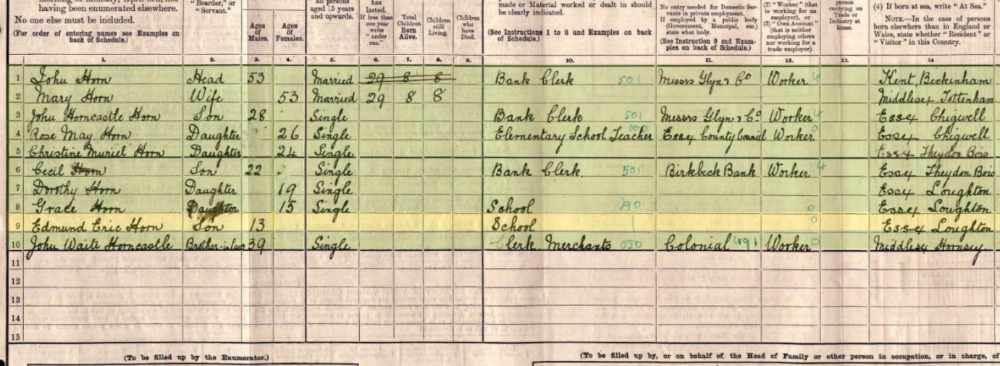
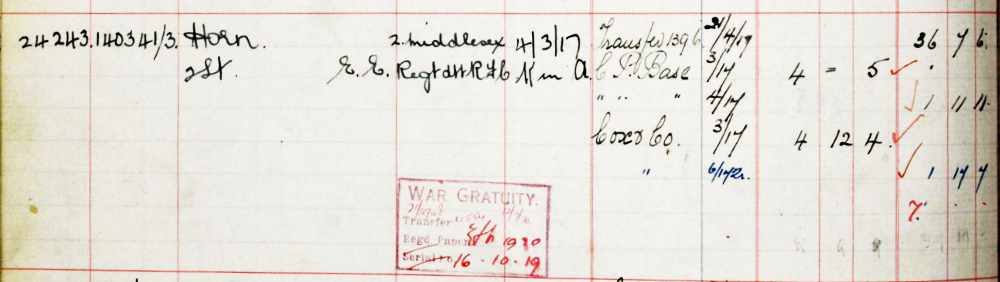
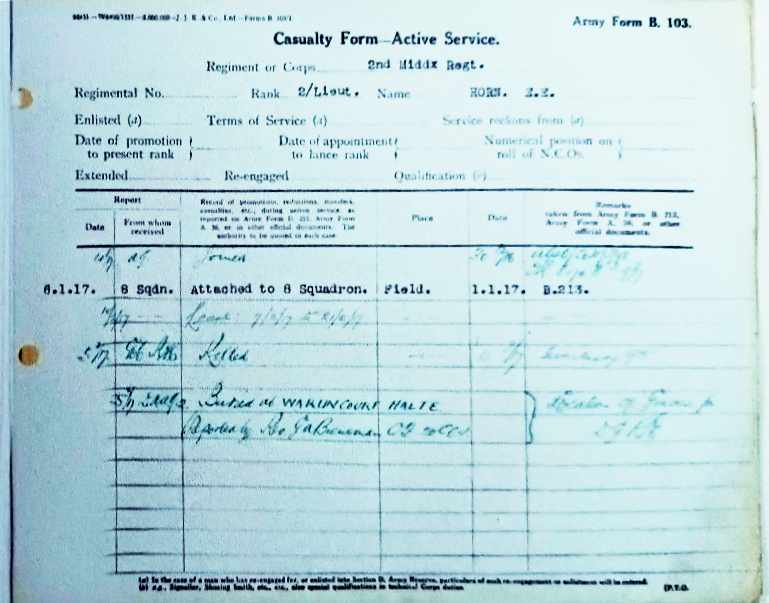
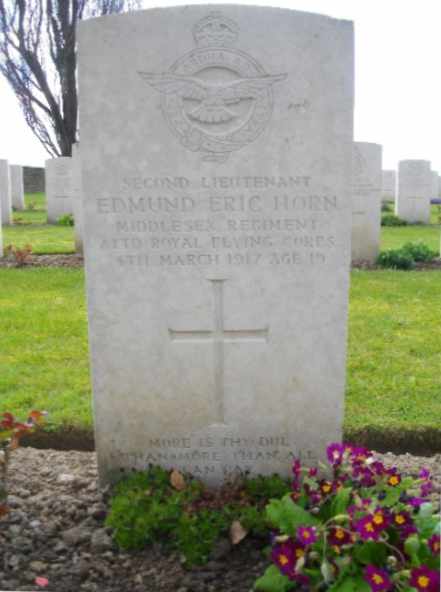
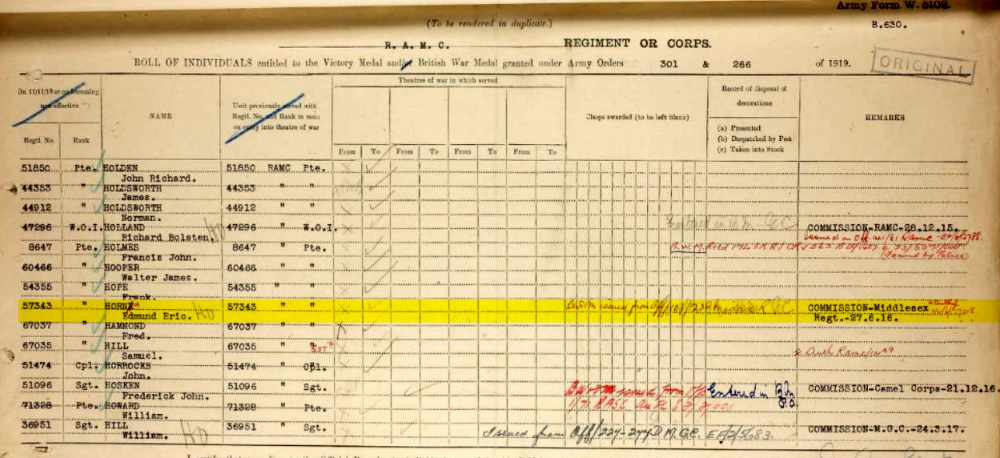
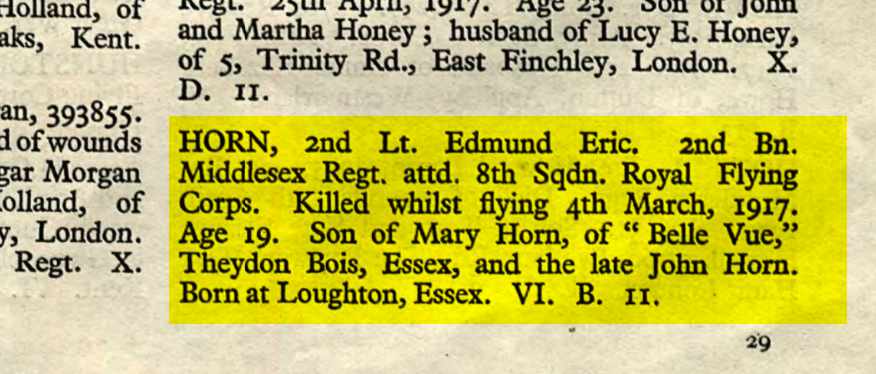
Edmund Eric Horn was born in 1898 and served as a Second Lieutenant with the Middlesex Regiment. The family lived at Mead Bridge Farm, Fairmead, High Beech (now a cattery). He died on 4th March 1917, aged 19. He is remembered at the Warlincourt Halte British Cemetery. Although a member of the Middlesex Regiment, he died whilst in the air, “attending the 8th Squadron RFC”. Possibly taken up as an observer over the battlefield. Records of the 8th Squadron of the RFC show no accidents or deaths for that day.
How or why Edmund died that day remains unknown.
In March 1917, the 2nd Battalion was serving on the Western Front in France as part of the 23rd Infantry Brigade, 8th Division, of the British Expeditionary Force. It had landed at Le Havre in November 1914 and remained with this division throughout the war on the Western Front.
Throughout early 1917, 8th Division troops (including the 2nd Middlesex) were engaged in operations following the German withdrawal to the Hindenburg Line (Operation Alberich), as front-line units advanced into positions vacated by the retreating German Army.
In March 1917, British forces were occupying and probing the German defensive systems in the area between Arras, Bapaume and Cambrai as the German Army withdrew to prepared positions. This would have placed 8th Division units (including 2nd Middlesex) in the Arras-Cambrai sector in northern France, east of Arras, within the Pas-de-Calais and Somme regions.
On 4th March 1917, the 2nd Battalion, Middlesex Regiment was serving on the Western Front as part of the 23rd Brigade, 8th Division. The battalion had recently come out of the front line during the German withdrawal towards the Hindenburg Line and was in a period of movement and reorganisation ahead of later operations.
The battalion war diary entry for 4th March 1917 records:
4th March 1917:
The battalion remained in its billets and continued with routine training, inspections, equipment maintenance, and preparations for future operations. No major engagements with the enemy were recorded on this date, and no significant casualties or unusual incidents are noted in the diary.
During the first week of March 1917:
The battalion had recently completed a spell in the trenches. British forces were beginning to realise that German troops were withdrawing to the prepared defences of the Hindenburg Line (Siegfried Stellung). Much of the battalion’s activity consisted of route marches, company training, inspections, weapon cleaning, reinforcing personnel, and preparations for the advance that would eventually culminate in the Battle of Arras in April 1917.
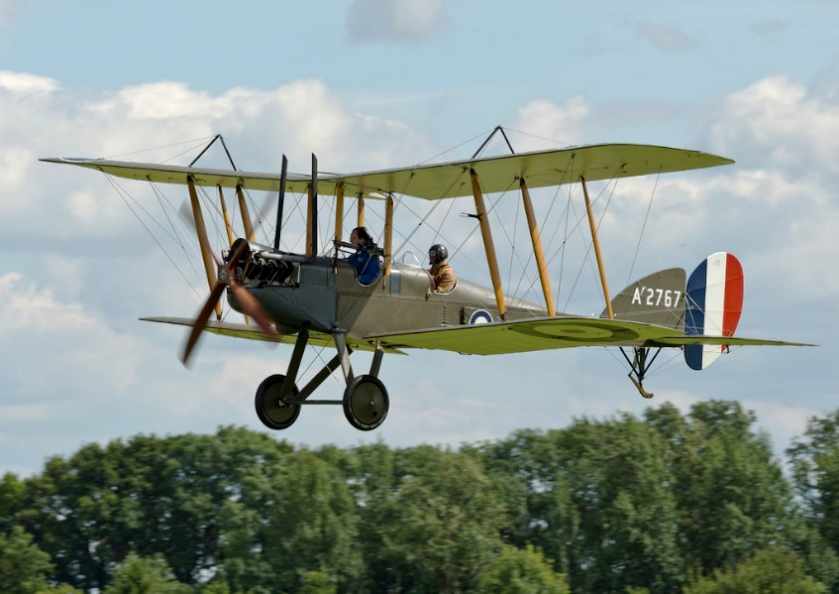
On 4th March 1917, No. 8 Squadron, Royal Flying Corps, was operating on the Western Front as an army co-operation squadron attached to British forces in France. At this stage of the war, the squadron was primarily equipped with the B.E.2e and carried out artillery observation, photographic reconnaissance, contact patrols, and tactical reconnaissance rather than air combat.
The squadron’s activities on 4th March 1917 included:
Artillery observation patrols to direct British fire onto German batteries and trench positions. Reconnaissance flights over the German lines to report troop movements and defensive works. Aerial photography of enemy trenches and roads to update intelligence maps. Contact with infantry headquarters to relay information gathered during patrols.
The weather on 4th March permitted flying, and the squadron flew a normal programme of army co-operation sorties. There is no record of any aircraft from No. 8 Squadron being lost or of any of its crews becoming casualties that day.
Operational context
In early March 1917, the British Army was becoming aware that the German Army was beginning its planned withdrawal to the Hindenburg Line. No. 8 Squadron was heavily engaged in monitoring this movement by locating abandoned German trenches, identifying newly occupied defensive positions, photographing roads and railways used during the withdrawal, and correcting artillery fire against German rear guards. This work involved aircraft and personnel.
On this date, the squadron was still flying the Royal Aircraft Factory B.E.2e, a stable aircraft well suited to reconnaissance but increasingly vulnerable to German fighters. Crews consisted of a pilot and an observer who operated the camera, maps, and wireless equipment (where fitted), and communicated artillery corrections.