
The Story of the Old Loughtonians Badge

An arm, a lopping axe – and a story that reaches back into the history of Loughton and Epping Forest.
The distinctive badge associated with Old Loughtonians has a story that goes much further back than the formation of the hockey club.
At its centre is an arm holding an axe. The axe represents the traditional lopping rights of the people of Loughton – the ancient right to cut branches from trees in Epping Forest for fuel.
But the story of the axe is also the story of Thomas Willingale, one of the best-known figures in Loughton’s struggle to protect those rights.
Thomas Willingale and the fight for the Forest
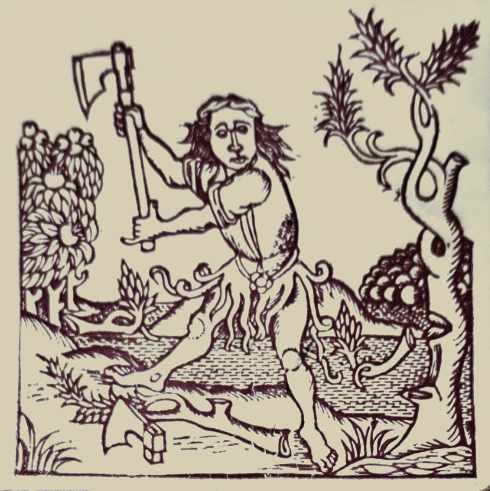
Thomas Willingale (1799–1870) was a Loughton labourer, woodman and gardener who strongly defended the traditional lopping rights of local people.
During the 1860s, parts of Epping Forest were being enclosed by private landowners. In Loughton, the Rev. John Whitaker Maitland, Lord of the Manor, enclosed large areas of Forest land.
Willingale refused to accept the loss of the ancient rights. In November 1865, he and members of his family broke through the fencing and continued to lop trees as they had done before. Legal proceedings followed, and Willingale subsequently brought his own legal challenge against Maitland, supported by the Commons Preservation Society. His case helped to delay further enclosure while the wider campaign to save Epping Forest gathered strength.
Willingale died in 1870 and therefore did not live to see the final outcome. In 1878, Parliament passed the Epping Forest Act, ending the enclosure of the remaining Forest and placing it under the protection of the City of London Corporation. The traditional lopping rights were themselves extinguished as part of the settlement.
Loughton received £7,000 in compensation for the loss of its lopping rights, and part of this money was used to build Lopping Hall, which opened in 1884. The Hall remains a lasting reminder of the importance of the lopping tradition to Loughton.
From Loughton and the Forest to the school badge
The connection between the lopping tradition and Loughton School is particularly interesting.
Former pupils have independently recalled that the school’s badge featured an arm wielding a lopping axe. Ken Stafford, who attended the school from 1943 to 1948, recalled the badge on the school’s red cap and jacket and specifically linked it to the Lopping Act, the lopping concession and Lopping Hall. Bob Farmer, who left the school in 1954, similarly remembered the red school uniform bearing an arm with a lopping axe.
We have not yet found a surviving school record which tells us exactly when the badge was first adopted. What is clear, however, is that the arm and axe were an established part of Loughton School’s identity by the middle of the 20th century.
From school to Old Loughtonians
The badge subsequently became the emblem associated with the Old Loughtonians, linking generations of former pupils with their school and with the history of their home town.
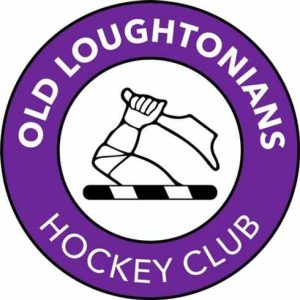
When former Loughton School pupils formed Old Loughtonians Hockey Club in 1921, the club carried forward that Old Loughtonians identity.
Today the arm and axe are perhaps most readily recognised as the badge of Old Loughtonians Hockey Club. But the symbol is much older than the club itself.
It takes us back to Loughton School, Loughton’s historic lopping rights and the centuries-old relationship between the people of Loughton and Epping Forest.
A small badge with a big story
The next time you see the Old Loughtonians badge, look at the axe.
It is a reminder of a time when Loughton’s people depended on the Forest for fuel, of the struggle to protect their ancient rights, of Thomas Willingale and others who resisted the enclosure of the Forest, and of the eventual preservation of Epping Forest for everyone.
The badge is therefore not simply a school or sporting emblem. It is a small piece of Loughton’s history.